DITCH SINGLE-USE FOR PLASTIC FREE JULY

Published on Clean Air Council’s website, July 2021

Pennsylvania taxpayers spend over $13 million every year just cleaning up roadside litter. This money should be spent on more important things such as public education. 

Plastics are slowly killing life on earth. We enjoy the convenience of plastics but delude ourselves that we can dispose of them safely. We give little thought to the damage done to the environment and to public health that results from extracting the fossil fuel needed to produce and manufacture plastics. We worry about climate change but stubbornly do not make the connection between plastic production and emissions of greenhouse gases. Most people falsely believe that recycling plastics is the answer — even though the vast majority of plastics can not be recycled and there is no real market for recycled plastics. Most of us will remember that distressing video of a sea-turtle with a plastic straw stuck in its nose. That’s happening every day. Plastics don’t really break down, they turn into dangerous microplastics that we’re now consuming.  

Plastics are everywhere — some are necessary, many are not. Food wrappers, cigarette filters, single-use plastic bags, plastic straws, styrofoam.   

The easiest plastics to avoid are the single-use plastic items we use for convenience or out of habit. As residents, we pay a high financial cost for single-use plastics. The City of Philadelphia spends between $9 million and $12 million every year cleaning plastic bags from the streets, sewers, and bodies of water. Philadelphia alone uses approximately one billion plastic bags per year, many of which end up as litter in our neighborhoods. Pennsylvania taxpayers spend over $13 million every year just cleaning up roadside litter. This money should be spent on more important things such as public education. 

The plastic and petrochemical industry mislead the public by marketing plastics as “recyclable” when in reality, less than 9% of all plastic ever produced has been recycled. There is no viable solution for plastic waste. According to the United Nations Environment Programme, 12% of plastics are burned in incinerators (increasing air pollution in communities of color where waste incinerators are typically located) and 79% of plastics are deposited in landfills, dumps or end up in the natural environment. 

Nearly all plastics produced derive from oil, fracked gas, and coal — dirty, non-renewable resources. Plastics and the climate crisis go hand-in-hand: plastic production depends on fossil fuels, and fossil fuels rely on plastic production.  

Another hidden cost to single-use plastics: human health. For instance, Royal Dutch Shell’s 386-acre ethane cracker—built to make plastics— is set to power up this year about 25 miles outside of Pittsburgh in Beaver County. Shell’s plant will release 159 tons per year of fine particulate matter and 522 tons per year of volatile organic compounds (VOC), according to the Council’s 2014 Health Impacts Assessment. VOCs exacerbate health conditions including asthma, cardiovascular disease, cancer, endocrine disruption, and adverse birth outcomes. 

There are also terrifying new links being made between microplastics and other toxins. Scientists are finding that microplastics accumulate toxins like DDT and PCBs from trace levels that may already exist in the environment, and deliver them to wildlife and humans that eat them, often bioaccumulating through the food chain.  

The Council spent more than 10 years advocating to pass a Philadelphia single-use plastic bag ban. However, Philadelphia’s plastic bag ban was delayed one year due to COVID-19 and will now go into effect on July 1, 2021.

The Council advocates for turning off the “plastics tap,” and is fighting legislation that would limit local government’s ability to regulate single-use plastic items. Representing Pennsylvania residents in court, the Council joined the City of Philadelphia, Borough of West Chester, Borough of Narberth, Lower Merion Township, and the City of Pittsburgh in a lawsuit to overturn the state’s unconstitutional preemption of municipalities from enacting or enforcing single-use plastic legislation. The Council is fighting for local residents and leaders to implement sustainable solutions locally to plastic pollution.

It’s time to end our addiction to plastic, enact local solutions, and choose to protect the environment over convenience. Start by ditching single-use plastics for Plastic Free July and spreading the word about plastic pollution. 

Written by Jessica Bellwoar, Development Officer, jbellwoar@cleanair.org. For more information on the PA Plastics Preemption lawsuit contact, Logan Welde, Staff Attorney, lwelde@cleanair.org

Zero Waste PA Plan Deserves Support

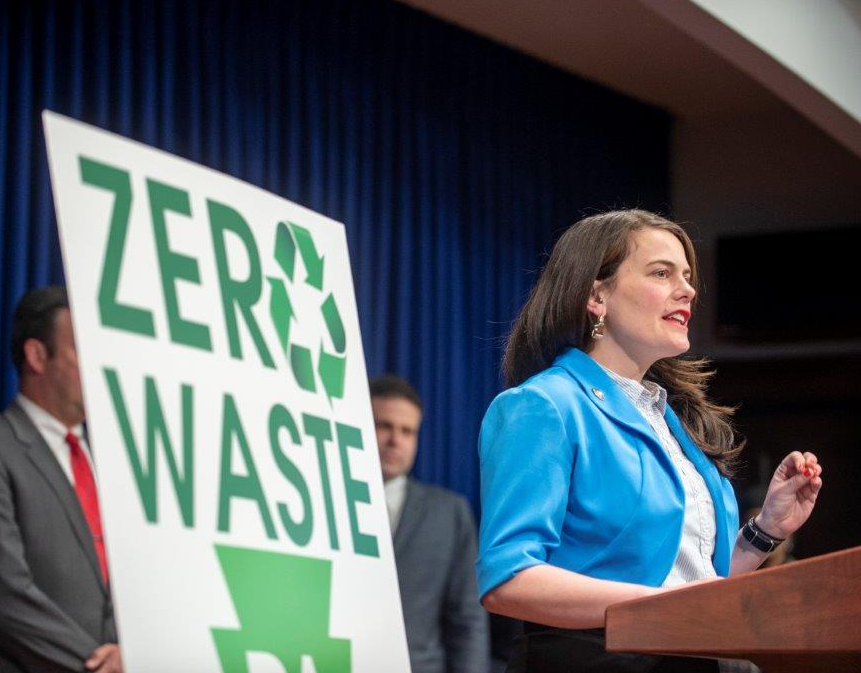
PA House Rep. Elizabeth Fiedler speaking at Zero Waste PA press conference in April 2019, alongside 10 other PA House Reps. Photo Credit: Author

Letter to the Editor of The Delco Times:

Published 04/27/19
Dear Editor,

As the nation celebrates Earth Day this week, it’s important to applaud the leadership of our local elected officials working to protect our environment.

In particular, I was excited to hear about Chester County Reps. Danielle Friel Otten and Melissa Shusterman introducing legislation to create composting systems and improve systems for “hard to recycle” items like plastic and styrofoam packaging.

The representatives proposals are part of a larger package of bills being introduced in the Pennsylvania General Assembly called the “Zero Waste PA” legislation.

In total, the Zero Waste Pa. legislation will promote more recycling across the state, address pollution from single use plastics and chronic litter problems facing many communities, and help divert waste from our landfills and incinerators.

This Earth Day, Reps. Friel Otten and Shusterman deserve a pat on the back from their constituents for their work to make sure that every day is Earth Day.
Jessica Bellwoar
Conservation Associate
PennEnvironment

Ten tips for reducing holiday waste

Published on PennEnvironment website, Dec 2018

Co-authors: Jessica Bellwoar, Celeste Meiffren-Swango

With the holiday shopping season upon us, it’s easy to get caught up in the excitement and buy more than we need, for our children and for others. Here are ten tips for how you can help reduce plastic pollution and other waste around the holidays:

1. Give the gift of sustainability. Don’t have an idea for what to get your loved ones for the holidays? How about a plastic-free starter kit? Durable travel mugs and water bottles, reusable grocery bags and food containers, silicone sandwich bags, and glass, steel, or bamboo straws are all great alternatives to their single-use plastic counterparts and can go a long way towards reducing a loved one’s plastic footprint.

2. Skip the plastic packaging where you can. When buying gifts, you can reduce your plastic footprint by avoiding gifts that are heavily packaged in plastic, especially children’s toys. Most of the time, this packaging can’t be recycled, so it will inevitably end up in the landfill or our natural environment.

3. Buy local. Shopping locally can help avoid all of the excess packaging and shipping materials from shopping online. Buying in person rather than online can also reduce the fossil fuels needed to transport your goods across the country– plus, you’ll be supporting a local business in your community at the same time!

4. Consider buying used or refurbished electronics. In the market for new electronics this holiday season? Consider buying them refurbished instead of new. Repaired devices can provide equivalent performance at much lower prices and help mitigate the environmental impacts of brand new devices. Just make sure to recycle your old electronic products and don’t throw them in the trash. Check out this online guide from our friends at PennPIRG to learn what to look for and what to avoid when buying used or refurbished electronics.

5. Consider buying other gifts used as well. Though it might seem less glamorous, there are a lot of things out there in perfect condition looking for a new home, and they can be found for lower prices while reducing waste. Swing by your local thrift shop, consignment shop, or antique store and see if you can find some hidden treasures.

6. Skip giving “things.” Who says that your holiday gifts have to be “things” at all? Giving memberships and subscriptions as presents can provide year-long benefits while avoiding the production costs of ever-more stuff. Or, go even more low-tech and hand out coupons for a date night or a home cooked meal. Not only is this less wasteful, the thought and creativity of this gift will be well-received.

7. Cook and bake at home. Cooking at home as opposed to ordering takeout or buying pre-prepared food can help save takeout packaging and is a fun thing to do over the holidays. After your meal, if you have a lot of food left over, consider donating it to a local food rescue organization or food pantry, avoiding food waste.

8. Save your gift wrapping. When wrapping– and unwrapping– your gifts, keep in mind that gift bags and wrapping paper can be saved and used again in future years.

9. Repair a loved one’s favorite possession. Another great gift option that actively helps reduce waste while ensuring the person getting the gift will love it is deceptively simple: repair what your loved ones already have. We all have a favorite jacket with a busted zipper or a pair of shoes in desperate need of a resole; instead of getting new items, helping to fix what’s already beloved is a no-brainer.

10. Give a loved one a membership to PennEnvironmet. Please consider giving your friends and family (or yourself #selflove) the gift of membership to PennEnvironment. We are working hard to reduce plastic pollution and fight waste every day: http://bit.ly/PAEHolidayGift 

Wishing you a happy and sustainable holiday season!

PennEnvironment hosts waterways clean-up to demonstrate support for banning single-use foam

For Immediate Release

For more information contact: Jessica Bellwoar, PennEnvironment, (610) 308-0868

Philadelphia, PA — Today, PennEnvironment hosted a waterway clean-up event with members of the Philadelphia and Delaware County communities to demonstrate strong support for reducing the plastic pollution that is harming our wildlife and health. Specifically, the group called on the PA Legislatures to pass a statewide ban on single-use polystyrene.

Polystyrene — what many people refer to as ‘Styrofoam’ — is one of the worst forms of plastic pollution and is often used in cups and take-out food containers. Every day Americans use and throw away more than 70 million plastic cups. This comes to 8 billion Styrofoam cups – excluding take-out containers and silverware – that end up polluting American waterways and coastlines annually.

The massive accumulation of plastic is exemplified by the Philadelphia Water Department’s removal of more than 12 tonnes of trash from the Schuylkill and Delaware rivers in 2017 alone.

“We simply can’t continue to produce and throw away plastic at this rate,” said Jessica Bellwoar, Conservation Associate with PennEnvironment. “Nothing we use for five minutes should pollute the Delaware River forever. It’s time to put our wildlife over waste and we urge our elected officials to take action and lead the way on this issue.”

Once polystyrene enters our waterways, it is easily ingested by aquatic wildlife. Scientists have found plastic fragments in hundreds of species, including 86 percent of all sea turtle species and nearly half of all seabird and marine mammal species.

“A Styrofoam container might hold our take-out food for only a matter of minutes, but it can take hundreds or even a million years for it to decompose naturally and in the meantime it clogs our local waterways and poses a threat to birds and marine life,” said Rep. Tim Briggs, D-Montgomery. “I’ve introduced legislation that would reduce the amount of Styrofoam polluting our environment, and I’ll continue to support ways we can reduce our impact on the world around us.” There are already 25 cosponsors signed onto the ban polystyrene house bill.

PennEnvironment - John Heinz Wilderness Refuge cleanup event - July 2019 - by PennEnvironment-24

“Across the country, polystyrene foam bans have passed in more than 200 cities and communities, and some companies have committed to phasing polystyrene out,” said Senator McGarrigle. “If they can do it, everyone can do it. I urge other elected officials to sign onto this legislation. We can’t outwait polystyrene. We have to act now.”

Plastics also pose risks to human health, attracting harmful chemicals including carcinogens, neurotoxins, and endocrine disruptors. Humans can ingest microplastics by eating contaminated seafood and by coming into contact with everyday plastic packaging. Much of the plastic waste in Philadelphia ends up on New Jersey and Delaware coast lines, where we fish commercially and consume seafood and fish contaminated with these microplastics.

John Heinz National Wildlife Refuge Manager, Lamar Gore, referenced a statistic from earthday.org that puts our plastic dilemma in perspective. “Approximately 25 million tonnes of plastic packaging produced annually flows into our oceans, which is the equivalent of pouring one garbage truck of plastic into the ocean every minute. How do we approach this? Individually or as organizations, we can make changes from single-use plastics to reusable products. At the refuge, we are taking another step, as our Watershed Fellow, Kristofer Booker, with the Alliance for Watershed Education launches our Caretakers of the Creek Program today. It starts from the community.”

“Every year for over 30 years, Darby Creek Valley Association (DCVA) members and friends remove bags upon bags of plastic from the Darby Creek. According to a report by the Ellen MacArthur Foundation, there will be more plastic than fish in our ocean by 2050. Friends of Heinz Refuge and DCVA encourage everyone to take the plastic challenge and eliminate its use at home and support our legislators ‘ efforts to ban the most harmful of products.” said Jaclyn Rhoades, President of Friends of Heinz Refuge and Darby Creek Valley Association.

“Pennsylvanian constituencies are quite puzzled on why we haven’t taken stronger action to address plastic pollution. We want to see protections for our environment so future generations can grow up to enjoy our beautiful forests, lakes and streams.” said PennEnvironment’s Field Manager Mia Vega.

PennEnvironment has been knocking on doors in towns across the state to generate support for a statewide ban on polystyrene.

###

PennEnvironment is a statewide, citizen-based grassroots environmental advocacy group, dedicated to protecting our air, water and open spaces. We investigate problems, craft solutions, educate the public and decision-makers, and help the public make their voices heard in local, state and national debates over the quality of our environment and our lives. For more information, visit www.PennEnvironment.org.