Started in 1981, the Fresh Air Newsletter offers the latest environmental news, local events, educational resources and programmatic updates on Clean Air Council’s work.
Started in 1981, the Fresh Air Newsletter offers the latest environmental news, local events, educational resources and programmatic updates on Clean Air Council’s work.
Pennsylvania taxpayers spend over $13 million every year just cleaning up roadside litter. This money should be spent on more important things such as public education.
Plastics are slowly killing life on earth. We enjoy the convenience of plastics but delude ourselves that we can dispose of them safely. We give little thought to the damage done to the environment and to public health that results from extracting the fossil fuel needed to produce and manufacture plastics. We worry about climate change but stubbornly do not make the connection between plastic production and emissions of greenhouse gases. Most people falsely believe that recycling plastics is the answer — even though the vast majority of plastics can not be recycled and there is no real market for recycled plastics. Most of us will remember that distressing video of a sea-turtle with a plastic straw stuck in its nose. That’s happening every day. Plastics don’t really break down, they turn into dangerous microplastics that we’re now consuming.
Plastics are everywhere — some are necessary, many are not. Food wrappers, cigarette filters, single-use plastic bags, plastic straws, styrofoam.
The easiest plastics to avoid are the single-use plastic items we use for convenience or out of habit. As residents, we pay a high financial cost for single-use plastics. The City of Philadelphia spends between $9 million and $12 million every year cleaning plastic bags from the streets, sewers, and bodies of water. Philadelphia alone uses approximately one billion plastic bags per year, many of which end up as litter in our neighborhoods. Pennsylvania taxpayers spend over $13 million every year just cleaning up roadside litter. This money should be spent on more important things such as public education.
The plastic and petrochemical industry mislead the public by marketing plastics as “recyclable” when in reality, less than 9% of all plastic ever produced has been recycled. There is no viable solution for plastic waste. According to the United Nations Environment Programme, 12% of plastics are burned in incinerators (increasing air pollution in communities of color where waste incinerators are typically located) and 79% of plastics are deposited in landfills, dumps or end up in the natural environment.
Nearly all plastics produced derive from oil, fracked gas, and coal — dirty, non-renewable resources. Plastics and the climate crisis go hand-in-hand: plastic production depends on fossil fuels, and fossil fuels rely on plastic production.
Another hidden cost to single-use plastics: human health. For instance, Royal Dutch Shell’s 386-acre ethane cracker—built to make plastics— is set to power up this year about 25 miles outside of Pittsburgh in Beaver County. Shell’s plant will release 159 tons per year of fine particulate matter and 522 tons per year of volatile organic compounds (VOC), according to the Council’s 2014 Health Impacts Assessment. VOCs exacerbate health conditions including asthma, cardiovascular disease, cancer, endocrine disruption, and adverse birth outcomes.
The Council spent more than 10 years advocating to pass a Philadelphia single-use plastic bag ban. However, Philadelphia’s plastic bag ban was delayed one year due to COVID-19 and will now go into effect on July 1, 2021.
The Council advocates for turning off the “plastics tap,” and is fighting legislation that would limit local government’s ability to regulate single-use plastic items. Representing Pennsylvania residents in court, the Council joined the City of Philadelphia, Borough of West Chester, Borough of Narberth, Lower Merion Township, and the City of Pittsburgh in a lawsuit to overturn the state’s unconstitutional preemption of municipalities from enacting or enforcing single-use plastic legislation. The Council is fighting for local residents and leaders to implement sustainable solutions locally to plastic pollution.
It’s time to end our addiction to plastic, enact local solutions, and choose to protect the environment over convenience. Start by ditching single-use plastics for Plastic Free July and spreading the word about plastic pollution.
Written by Jessica Bellwoar, Development Officer, jbellwoar@cleanair.org. For more information on the PA Plastics Preemption lawsuit contact, Logan Welde, Staff Attorney, lwelde@cleanair.org.
Started in 1981, the Fresh Air Newsletter offers the latest environmental news, local events, educational resources and programmatic updates on Clean Air Council’s work.
Started in 1981, the Fresh Air Newsletter offers the latest environmental news, local events, educational resources and programmatic updates on Clean Air Council’s work.
Started in 1981, the Fresh Air Newsletter offers the latest environmental news, local events, educational resources and programmatic updates on Clean Air Council’s work.
As many of us get ready to kick off our July Fourth vacations, sightseeing and picnics, it’s the perfect time to celebrate America’s commitment to preserving the outdoors and our access to it.
But protecting and maintaining these iconic outdoor destinations don’t happen by accident. That requires sustained stewardship, as well as money. Right now, Congress has a chance to make sure Pennsylvania’s outdoor treasures are protected for generations to come.
That means fully funding America’s best conservation program: the Land and Water Conservation Fund.
In the early 1960s, President John F. Kennedy came up with the idea for the program, later signed into law by President Lyndon Johnson in 1965. The promise? To invest hundreds of millions of dollars in outdoor projects for the benefit of all Americans.
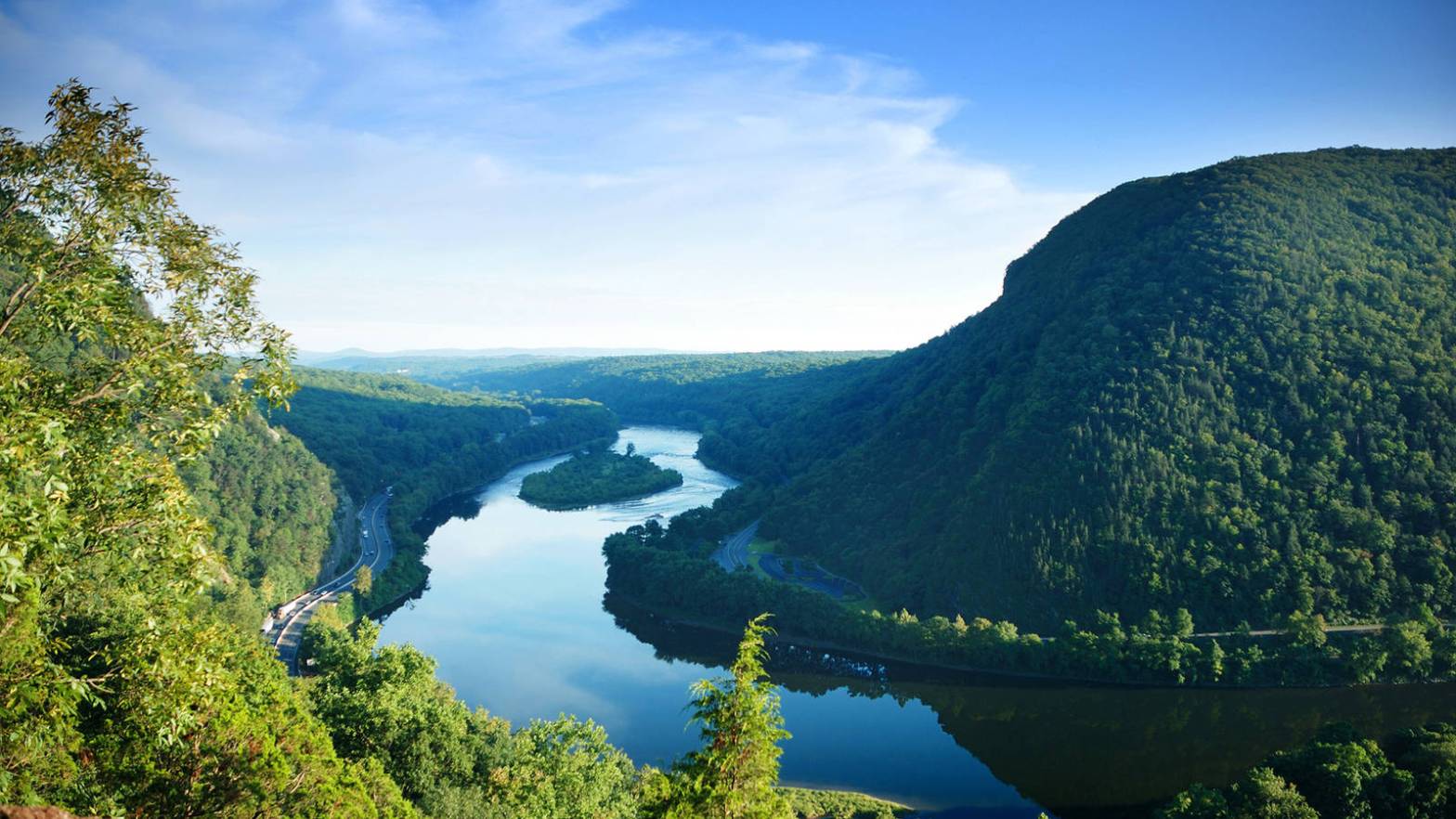
In the 54 years that the fund has been around, it has supported over 41,000 projects in all 50 states, whether national parks (think Valley Forge, the Appalachian Trail, Gettysburg and Delaware Water Gap), hiking trails or youth sports fields.
All Americans benefit from Land and Water Conservation dollars. Despite how long the fund has been around, most Pennsylvanians are unaware of how it enhances our quality of life and the environment around us. For example, the fund is the reason we could create the Flight 93 Memorial to both honor the victims from 9/11 and restore the surrounding area in Shanksville by planting hundreds of trees to build a new forest alongside the memorial.
Over the years, Congress has had to reauthorize the fund multiple times, but legislators have only twice fully funded the program at $900 million. Instead, common practice has been to divert the money elsewhere. In fact, Congress has raided $22 billion from the fund since its inception.
But in 2019, hope rises like spacious skies over amber waves of grain.
With overwhelming majorities, Congress passed a bill signed by President Donald Trump in March that permanently reauthorized the fund. Then, two weeks ago, a bipartisan group of representatives, including Rep. Brian Fitzpatrick from Bucks County, unveiled a bill in the House that would allocate the full annual allotment of $900 million. That bill has passed out of committee and now heads for a full floor vote. The Senate also held a hearing on June 25 on a similar bipartisan bill for full funding.
Fitzpatrick continues to be a vocal champion for Pennsylvania’s public parks and our outdoor treasures. If we are going to protect the Land and Water Conservation Fund for years to come, we need all of our Pennsylvania senators and members of Congress to fight for secure, permanent, long-term funding so that Bucks County can benefit from places like Neshaminy State Park, Tyler State Park and Core Creek Park.
So while we’re enjoying celebrating our nation’s birthday, we should remember that one of the reasons we have so many beautiful destinations to choose from is the Land and Water Conservation Fund. I think we can all agree that a dollar spent to protect America’s iconic landmarks today and for generations to come is a good investment.
I’m encouraged and inspired by the overwhelming public support behind the fund. Now it’s time for our elected officials to finish the job and fully fund America’s best conservation program.
Jessica Bellwoar is the conservation associate for PennEnvironment, a citizen-based nonprofit environmental advocacy group.
MARPLE, PA — PennEnvironment and Representative Mike Zabel of Delaware County joined Newtown, Haverford, and Marple Townships for their Annual Electronic Recycling Event on Saturday.
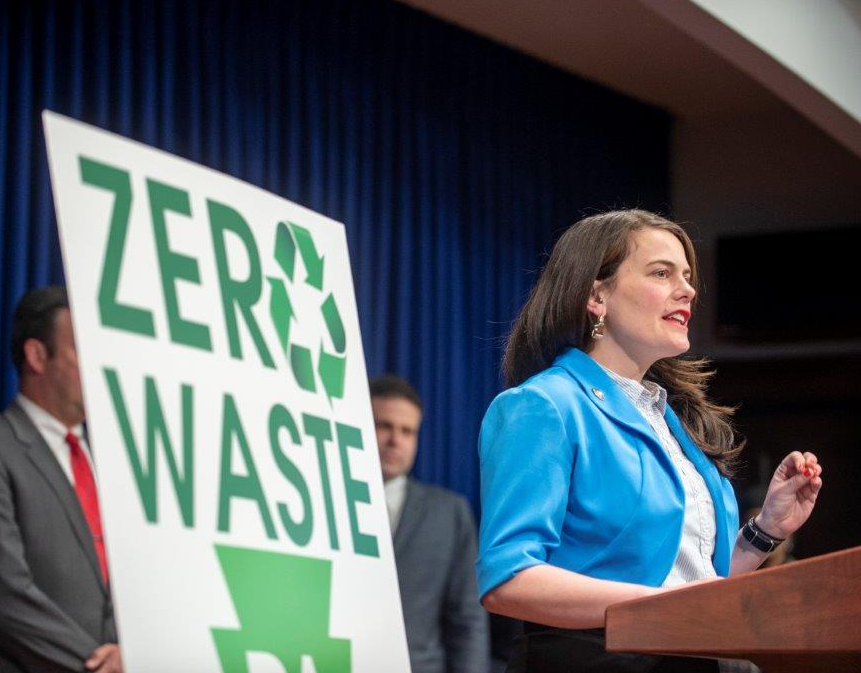
Thousands of residents took advantage of the townships free recycling event. Yet, many in Pennsylvania don’t have access to electronic recycling programs. It’s one reason PennEnvironment is working with Rep. Zabel and others State House legislators on the “Zero Waste PA” legislative package to address our state’s growing waste and to tackle our “throw-away” society.
Saturday’s recycling drive-through event took place at Delaware County Community College and drew township residents, whose cars zig-zagged in long rows around the parking lots as they waited to unload their old cell phones, computers, televisions, microwaves, fax machines, air conditioners, small appliances, and more. Township officials estimate that more than 4,000 residents took part in the electronic waste, or e-waste, recycling event this year. Residents waited in lines for up to 2 hours to make sure they were diligently recycling their obsolete and unused electronic products.
“Residents across Delaware County and across Pennsylvania want the ability to easily recycle their outdated electronics because it’s good for the environment,” said Jessica Bellwoar, PennEnvironment’s Conservation Associate, “but we have vastly inadequate e-waste recycling programs and facilities in Pennsylvania and challenged by a failing e-waste program”.
In 2017, there were 58.1 million pounds of covered devices recycled in PA by 62 manufacturers according to the Pennsylvania DEP. Despite this seemingly large amount, we only recycle 12.5 percent of e-waste nationally.
“It’s clear that Delco residents want a better way to recycle their our old electronics, and I am committed to making that process easier and more accessible,” said Rep. Mike Zabel. “This isn’t a partisan issue, just one of a common sense. Our electronics recycling law needs reform, and I am ready to lead the way.”
While e-waste represents only 2% of America’s trash in landfills, it represents 70% of the toxicity in the waste stream as electronics contain dangerous chemicals like mercury, cadmium, and lead. Research has shown that leached toxic materials in electronics can cause cancer, reproductive disorders, brain and kidney damage and many other health problems.
To better protect our environment from toxic run-off and properly dispose of our electronics, we need to dramatically update Pennsylvania’s e-waste programs to be more effective.
That’s why PennEnvironment is thankful to Rep. Mike Zabel for introducing legislation in the State House to modernize Pennsylvania’s e-waste law and make it easier for all of us to recycle our old or unused electronics.
“When over two-thirds of Pennsylvania counties do not have access to free and convenient electronic recycling,” said Bellwoar, “we need to act and make it easier for all Pennsylvanians to be good stewards of the earth by recycling their electronic products.”
Rep. Zabel’s legislation is part of the “Zero Waste PA” package of 13 house bills aiming to reduce how disposable our society has become.
###
PennEnvironment is a statewide, citizen-based grassroots environmental advocacy group, dedicated to protecting our air, water and open spaces. We investigate problems, craft solutions, educate the public and decision-makers, and help the public make their voices heard in local, state and national debates over the quality of our environment and our lives. For more information, visit www.PennEnvironment.org.
As the nation celebrates Earth Day this week, it’s important to applaud the leadership of our local elected officials working to protect our environment.
In particular, I was excited to hear about Chester County Reps. Danielle Friel Otten and Melissa Shusterman introducing legislation to create composting systems and improve systems for “hard to recycle” items like plastic and styrofoam packaging.
The representatives proposals are part of a larger package of bills being introduced in the Pennsylvania General Assembly called the “Zero Waste PA” legislation.
In total, the Zero Waste Pa. legislation will promote more recycling across the state, address pollution from single use plastics and chronic litter problems facing many communities, and help divert waste from our landfills and incinerators.
This Earth Day, Reps. Friel Otten and Shusterman deserve a pat on the back from their constituents for their work to make sure that every day is Earth Day.
PHILADELPHIA — In a bipartisan 363-62 vote, the U.S. House of Representatives approved a public lands bill last week that, if signed into law by President Trump, will permanently reauthorize the Land and Water Conservation Fund (LWCF). The bill passed the Senate 92-8 in late February.
LWCF, a historically bipartisan program that has funded projects in all 50 states since its inception in 1965, expired on September 30, 2018. The program supported everything from the expansion and maintenance of local parks and recreation centers to places like the Delaware River Water Gap, Valley Forge, Gettysburg National Park, and the Flight 93 Memorial
In Pennsylvania, LWCF has helped fund the creation and maintenance of more than 1,500 projects investing more than $315 million in the Commonwealth.
While the vote passed with broad support, sadly, Congressman Scott Perry was the only Pennsylvania House delegate to oppose renewing the program. PennEnvironment applauds the members of Congress who voted in support of protecting public lands.
Jessica Bellwoar, Conservation Associate for PennEnvironment, issued the following statement.
“America’s public lands — our National Parks, Forests and Wildlife Refuges — are the nation’s best known treasures and at the heart of a legacy of what makes America beautiful. By permanently reauthorizing the Land and Water Conservation Fund, Congress has reinstated one of our best tools for ensuring we can protect these iconic places.”
“We urge President Trump to sign the bill into law. Our public lands deserve no less.”
####
PennEnvironment is a citizen-based, statewide environmental advocacy organization working to ensure clean air, clean water, and protecting Pennsylvania’s great natural heritage. For more information about this and other PennEnvironment projects, visit www.PennEnvironment.org.







 JESSICA BELLWOAR